
Choice Loop

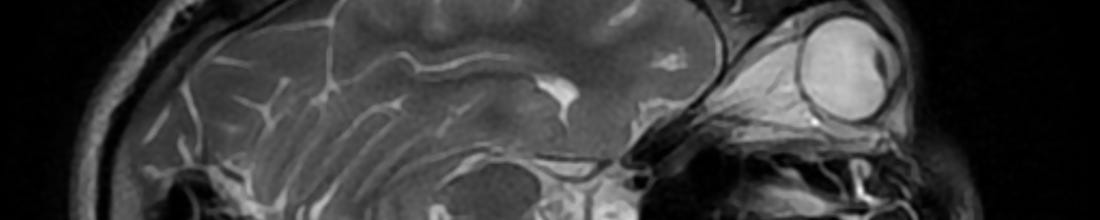
This is a transcribed conversation between
Dr. Mary L. Ruth, Head of Research of the W. P. Crawford Institute of the Mind, Manhattan Psychiatric Center
and
Dr. Samira Rodriguez, Resident Surgeon
Dated January 15th, 2029
SR:
Is the patient, well, is she aware?
MLR:
Is this your first surgery?
SR:
My second.
MLR:
And who was the first with?
SR:
Dr. Roseheart.
MLR:
I see, and what was the result of your first surgery with Peter?
SR:
The patient survived, no complications, but the treatment was ultimately unsuccessful.
MLR:
Unsuccessful in what way? Be specific.
SR:
The patient reported symptoms were unchanged, and ultimately, she took her own life.
MLR:
And how did that make you feel?
SR:
Frustrated, I guess?
MLR:
Is that really all?
SR:
I… uh..
MLR:
Take your time.
(sniffling)
MLR:
Any half decent doctor with a real understanding of what we're dealing with would cry as well.
(Sniffling gradually subsides)
Good. In fact, it gives me hope you will understand my methods.
SR:
What do you mean?
MLR:
You asked if the patient was aware. The answer is no, but she will be aware very soon. I know this is all very unusual, so I want to be careful that you understand. Here, hand me the drill.
SR:
… Understand what exactly?
MLR:
That every aspect of this procedure is absolutely critical to success. Every second of this procedure was determined by hundreds… no, maybe thousands of hours of operating time, on many patients, some of whom did not survive and probably died in agony… and died in silence.
(Whirring sound continues on and off. Drilling lasts for 148 minutes)
Bring the electrodes. We'll be placing those ones in the right and left prefrontal membrane, also lower hippocampus. Those there are for the occipital and the temporal. This big one will be for the hindbrain, near the stem. I'll do that one now.
SR:
There are a lot of them.
MLR:
Yes, and notice there is an insertion point for each one. Make sure all are used. Place them in the manner I showed you yesterday, do you remember?
SR:
Yes.
MLR:
Good, but anyway, here, watch how I do the first few. It need not be perfect, but the closer it is, the faster it will be for her later.
(Recording is silent for the next 174 minutes)
SR:
Doctor, I don't understand. I thought electroshock therapy was obsolete. Am I misremembering?
MLR:
Electroshock is obsolete. You are right. I'd go so far to say it was not medicine at all, but pure superstition. It is analogous to application of leeches for the removal of tainted blood.
SR:
So are we applying all of this for the purpose of … measurement?
MLR:
Measurements at first, but later, the treatment.
SR:
Monitoring the treatment?
MLR:
Let's get there in time. I want you first to understand the measurement, then you may understand the treatment, for all its faults.
See now, the signal is picking up. The patient is awake. What do you make of what is on the computer screen?
SR:
Well, there's a heart monitor, blood oxygen, blood pressure, but I don't understand the others: fear, relief, happiness, pain... Could that mean…?
MLR:
Yes, we do monitor these components.
SR:
And what is A1, A2, B3, and so on?
MLR:
Unclassified components. Here, let me show you some other views. You can access them on the screen on this tab at the top. This one will surprise you, I think.
SR:
What is that? It's noisy, but it looks almost like the ceiling of this room.
MLR:
Observe the patient has awoken. Her eyes are open.
SR:
That's … really amazing.
MLR:
Yes, we can piece together neutral activity in the occipital lobe, and correlate it with activity detected in the optical nerve, building a mapping between sight and perception. It is unprecedented.
Now look. She is still sedated but the chemical sedative has worn off, can you assess why?
SR:
Her eyes are not dilated, but her gaze is unfocused. She does not react to my hand.
MLR:
Correct.
SR:
I'm sorry, I don't get it. I've never seen a patient like this before.
MLR:
The electrode in the back, here, is acting as a sort of control barrier. By default, it is turned down quite low, for our safety and hers, of course. That may explain the lack of physical reaction… but?
SR:
No signs of emotional distress, in heart rate or blood pressure.
MLR:
Very good. Do you understand why?
SR:
The probes, I guess.
MLR:
‘Electrodes,’ but yes. The term ‘probe’ is usually reserved for measurement only. Crudely speaking, the electrodes enable a degree of control beyond physical, but the reality is, of course, more complicated than I can delve into now.
SR:
So do we control …
(laughing)
MLR:
We don't have mind control, Samira.
If only…. No, we merely have the means to deaden neural activity in a myriad of places, and to inject it, as needed. Spatial control is crude, as we are limited by the number of electrodes, but temporal control, and amplitude, is very much in our hands.
SR:
But we have the ability to suppress fear.
MLR:
Yes.
It was the first challenge I have had to overcome. It will also be the last.
SR:
This is… really spectacular. It will change everything.
MLR:
Come, I can explain more later, for now I think it best for you to take this foundation and build on it by observing.
SR:
What's next?
MLR:
Now, we relinquish some control, and we observe. Then, we add some stimulus, and observe. This part has all been preprogrammed, we need not even be present.
SR:
And what will the patient see? What will she feel?
MLR:
The first question is easy. The nurse will strap on goggles and headphones. The patient will see and hear whatever we program her to see and hear. She will feel many things, including things that she has never felt before, some emotional states that no one has ever felt before. A1, A2, B3, and there are more, AA1, F4, X8, we simply have no idea what these components are, but nonetheless it is important that we induce them, and observe the patterns and cycles that emerge.
Samira, I want you to stay a while and observe. Read the data and see what you can make of it. Take notes. When you are tired, go home and rest. We have the most important work ahead of us.
[[Transcript continues, dated Jan. 18, 2029]]
SR:
Doctor…
MLR:
Good morning, Samira.
SR:
Just what the fuck happened here?
MLR:
Samira, hold on—
SR:
I've been here, writing and recording everything. I haven't called the cops yet, but I will, unless you can tell me what the fuck happened here, and make it make sense. Tell me!
MLR:
I will tell you whatever you need to know, but stop shouting at me or I will have you removed. I have all the paperwork I need to carry out this treatment. Go ahead and call the police and make a fool of yourself.
SR:
Doctor, I just… did we kill this woman?
MLR:
Kill her? What put such a ridiculous notion into your head?
SR:
Her brain is dead! Your program tortured her and, and, the fear suppression-whatever, failed, and she was in pain! Lots of pain! And she did nothing but lay there, but the screen told me that inside her head, she was screaming!
MLR:
Alright, alright, just a moment—
SR:
And then the machine changed modes and her signals grew quieter and quieter and whenever there was any bit of fleeting activity it was crushed, and finally there was nothing, and all the signals were silent. And then, most horribly, the screen outline turned green.
MLR:
First of all, nothing failed here. We require observation on a variety of emotional components, including fear, including hate, and sadness and rage. We also require imputation of those components in unnatural amplitudes. As I said before, every part of this procedure is essential for its success. I have tried…
(Stops, then coughs, and clears her throat)
I have tried and tried and tried to find another way, there is none.
But she is not dead. The readings are there. Heart rate, blood oxygen, blood pressure, all are normal. Look at her chest rise and fall. Feel her pulse… see? She is very much alive. Her brain may be shut off for a while, but the machine has taken over all essential responsibilities.
The only way she dies, or I should say, you kill her, is by stopping the treatment. We will slowly turn her brain on again, then we will remove the machinery and you will see that she is perfectly healthy and alive. In fact, she will thrive.
SR:
Can you really just switch on and off a brain? What will the memory of this do to her?
MLR:
The treatment is horrifying, yes, but temporary. The patient will have no memory of it. For all intents and purposes, for her new life, it never happened.
There is no trauma. I've made sure of it. That's the beauty of it, don't you see? The pain, the horror, the damage from before is gone. Her mind has been released of its shackles, and free to begin anew. It is a second chance at life, and it is one that we can decide for her. She can be smart, successful, happy, she can be creative, profound, and most of all, she will be resilient to the horrors of the world. She'll no longer live in fear of others and of herself. It's in our hands right at this moment. We decide. Can you see what an opportunity we have just at this moment?
SR:
We …decide? What will we decide?
MLR:
You will decide. I've made up my mind. I think to feel better about all this, you should be the one to choose. Come here, and take a look at this catalog.
SR:
Are these all… real people?
MLR:
Yes and no. These are classifications of people, groups of tens of thousands each, for which we have collected and grouped together. For each, they have all volunteered information that has been collected over nearly a decade—information ranging from surveys to EEG and MRI scans. When they have died we often have attained permission to autopsy. It is truly an incredible database, like none we have ever seen.
SR:
These are … representations of people?
MLR:
Not just anyone. These are people who are smart, successful, creative, well-adjusted, and people who have overcome hardship and thrived.
SR:
So you're just, like, copying one of those people into her brain?!
MLR:
Not at all! Look Samira, slow down, will you? This is all more thought out than you're giving me credit for.
SR:
Just how exactly is this any different from some kind of weird, freaky brain transplant?!
MLR:
We're absolutely not copying down every detail from a single individual. Such a process would be noisy and inefficient. What components are useful and what are irrelevant? We have no clue. The brain and its machinations are too complicated for that.
We use statistics to draw out fundamental similarities between tens of thousands of individuals, and by averaging, wipe out the irrelevant components. It's those components which make each individual unique.
What we have is a foundation. After the procedure is complete, the patient will begin an ostensibly normal life, albeit somewhat incomplete. But over time, she rebuilds the unique components from scratch, and now upon strong foundations. Soon, she becomes another individual in the successful population, and if she chooses, can donate her own, uniquely constructed components to the database.
SR:
But wait a minute. This is what I don't get: what happens to the person exactly in the middle, when the loops going on inside their head are brought to a halt? Don't tell me about what they see, or even what AAB or whatever emotional component they have just before it happens. Don't tell me about what they remember, or what they are like when they are back. Tell me if, like I don't know, they're really the same person or not!
MLR:
I really don't understand your question. Their body is the same, but their personality will be different. What else is there? Personalities aren't fixed. We change those all the time. My husband was stabbed to death in front of me by a deranged homeless man, do you think I would recognize the person I was before that happened? Did the person I was before understand what it is like to lie awake every night for two months? No. The difference here is that we have a choice in how we change. Isn't having a choice better than having none?
SR:
But, like, is she still even there?! Will she even wake up or will it be someone else?! Someone from the database, or maybe, someone new, I guess? Or even someone like a machine, just posing as a real person? I just don't know!
MLR:
Samira, are you religious?
SR:
What?! I don't see how that matters!
MLR:
It feels like you are awfully close to using the word, ‘soul.’
SR:
Look, just… all I know is, standing here and talking to you, I have a sense of me, of who I am, a consciousness maybe? Something I have had my whole life, and I just don't know what constitutes it. When does it stop? When I die? When my brain stops spinning? I just don't know! I don't think we should be doing anything like this until we understand that.
MLR:
I suppose you think I'm some sort of monster, who is inadvertently killing people by taking away their ‘soul’ or ‘consciousness’ or whatever. Putting something back which might be something fraudulent, an emulation of a soul, but nothing more, am I right?
SR:
Well no, but… maybe.
MLR:
Samira, I have been staring at these monitors for years—let's see, yes, maybe thirty four years to be precise, so believe me when I tell you this. There really is no difference here between you or me or her other than what you see on the screen. We're all remarkably unique in many aspects, but inside the readings, you realize that we all are also remarkably the same. We all are just manifestations of the same self-circulating patterns of observation, choice, and reaction.
SR:
I just don't believe you! You just can't take a few measurements and hope to understand something as deep as consciousness! I feel like I'm more than that, and I think you do too!
MLR:
Samira, I…
MLR:
What can I do to explain…?
MLR:
Alright, alright. Let me tell you what I sincerely believe. Just hear me out, and try not to jump to any brash conclusions.
I believe in the soul, as devoutly as a Catholic. I've read plenty of philosophy about it. Believe it or not, I've thought quite a bit about exactly what I'm doing.
I believe, sincerely, that when you give such a self-replicating pattern a sufficient home, you create not a single soul, or consciousness, but what you might call a… sort of manifestation of a greater one, which might appear and disappear when circumstances merit, anywhere and any time. This fleshy container, or that fleshy container, means nothing. There is no this soul or that soul. There is The Soul, of the universe. Perhaps some would call it ‘God’?
So that's the way I see it. I think that we are all one soul, and the pockets here or there may think that we are different based on some illusion, but we are not. And some of us are suffering, Samira, trapped in a bad, self replicating, self harming loop, based on terrible circumstances or bad luck. What I'm doing here is not destroying a soul, but rather, recognizing that the soul is bigger than one body.
It is a natural phenomena that spans the universe. The whole universe is thinking together, in loosely connected, but separated chunks, that's what I think, and I'm not the first one to think so. I believe what we're doing here is breaking down that barrier between its manifestations, just a little, and allowing a tiny part of the universe to heal itself.
Maybe you don't believe me. That’s okay. You don't need to believe those philosophical details, that's just how I see it. Stay with me for a while. Observe more. I think you will come to see it as something like I do. These people are suffering, Samira, you know that. They have no other options. And the measurable results? Well, they speak for themselves.
SR:
If you really believe all that, then would you use it on yourself?
MLR:
Well, Samira…
… funny thing.
SR:
What?!
MLR:
Yes, I am a… ‘product’ of this treatment.
SR:
That's… I… don't know what…
MLR:
Yes, the thing you've been talking to all this time is one of these automata you seem to think exist.
Now, before you drive a stake through my heart, let me tell you a bit about it.
After my husband was murdered, I was in a state of severe chronic depression. A sort of malignant thought and decision loop. Therapy wasn't effective. Medication wasn't effective. The only way I could sleep was if I managed to knock myself out with enough opioids. I could only see two ways out of the loop: death, or the treatment. I chose the latter.
I took notes on my life, and collected pictures and memories that I wanted to keep. I collected many pictures of my husband. I wrote down everything I knew about him, including, painfully, the manner in which he died. I wrote it all down and wrote a list of instructions, for myself, after I awoke from the treatment.
My student at the time performed the procedure. It was flawless. I remember nothing from it, although the logs are there, and apparently I was indeed in great distress during the course of it. Indeed, I even regretted it at the time. I don't remember the regret, but the component is there in the logs, as loud as if it were screaming at me.
When I awoke, I had new memories. They were vague, formless and generic memories that felt real, but Samira, none of the people in these memories exist. None of the places exist either. They are generated samples from millions of memories that people have accumulated over tens of thousands of lives. Their faces were once blank or generic, but since then, my brain has filled in the gaps and now, I remember them as people I know today. They may be fake, in some sense, but they contain some essence of the human experience, in a distilled, pure form. They form the core of who I am. They are my… most cherished memories, because I am, after all, the one who chose them.
I reread my notes, my dissertation, and I returned to medical school and started everything over from scratch. I repeated my dissertation. I looked through all my pictures and I read my own words describing the death of my husband. I have no memory of the event. It is simply a collection of words to me now. I have defeated it, in a way. It holds no power over me anymore. I feel whole. I feel like a person. I think, and react, and I love people and I love myself.
That is my position. Do I have a soul? I have spent years wondering if I do. I feel like I do have one. Perhaps a feeling is all that it is. Perhaps a feeling is all that there is.
Now, I know there are questions to answer: details like who should get this treatment and when. That is for us to decide, and there is time to decide that later. For now, we simply need to decide what we want for this woman, lying here before us.
SR:
Her new personality? I don't think I can decide such a thing for anyone, even myself.
MLR:
You must. When you have a choice, you must find a way to choose.
SR:
Fine. These are all good choices, aren't they? I'll just choose randomly.
MLR:
Samira, really! You’re really going to choose like that?
SR:
Here, this one.
MLR:
This one? Here? Are you sure?
(Laughing)
SR:
What's wrong? Is that a bad choice?
MLR:
No! Not at all! Not at all.
It's just… out of all the ones you could have chosen, you happened to pick the one I would have chosen.
Spirituality is so adaptive...
Speaking as MLR: Does my procedure destroy your concept of a soul? I have a conception of a soul that's arguably more holistic than yours, and my procedure honors this soul, the universal soul, more than anything you have ever invented in your life. What makes you think your particular memories are so important to G-d? Pardon my use of religious terms, I may be a tad drunk, but seriously, my memories are taken from a being greater than either of us. Am I still "me"? Well, I can't for certain how who I was would have responded, but I feel alive, and I feel that that feeling is what matters most.
Ok, speaking as Avery, forgive me for running with it, I got inspired. I just wanted to work through some of that. Excited to read more!